
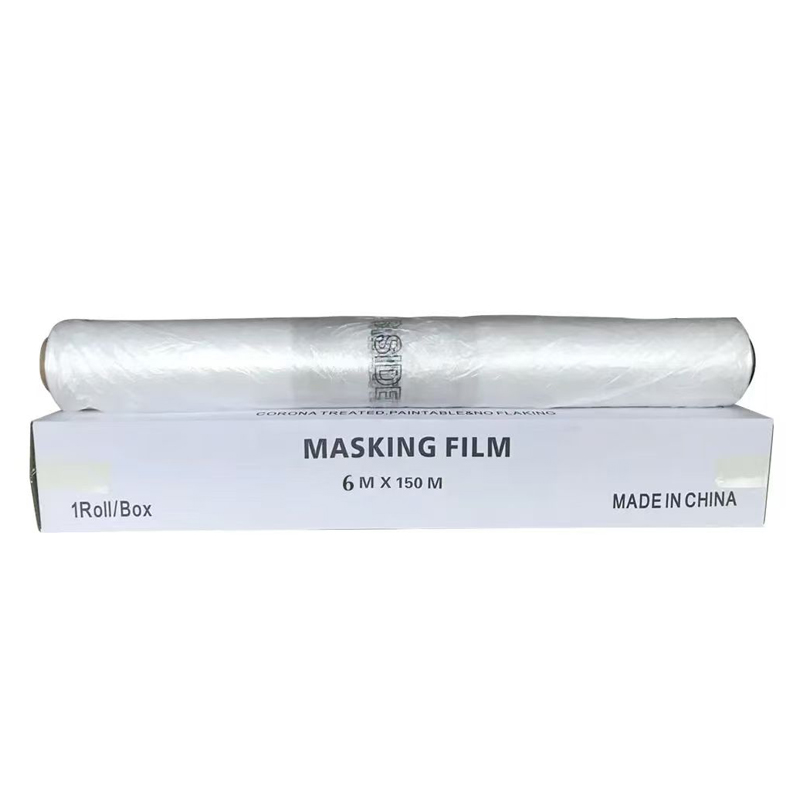
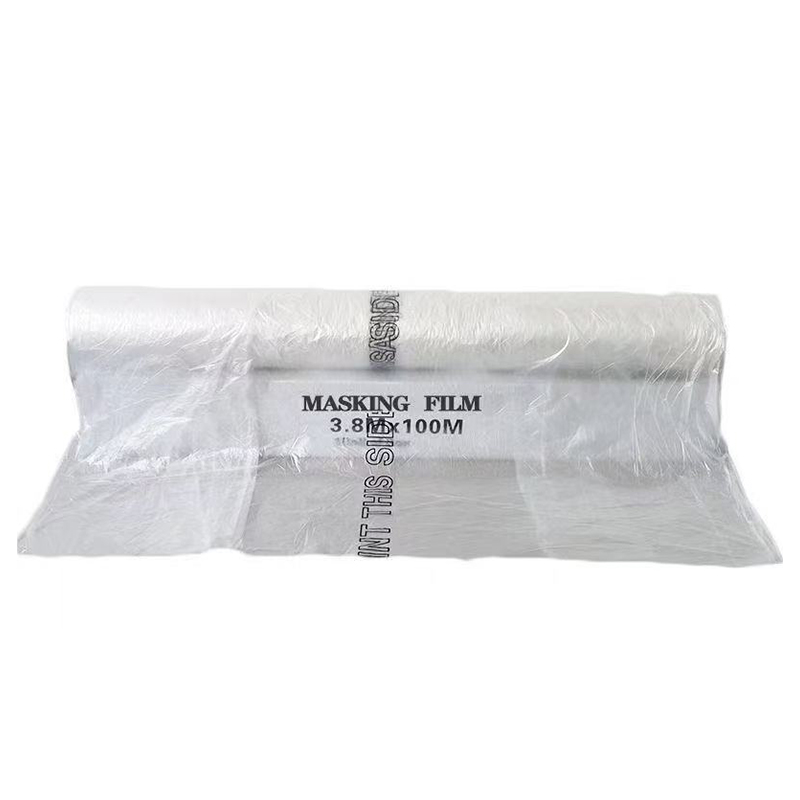
Car Masking Film
Brand: Bondprotek
Origin: Qingdao, China
Introduction:Plastic masking film is a common industrial and home decoration auxiliary material, mainly used for isolating and protecting specific areas during construction or cleaning, avoiding stains, coatings, and other attachments.
Core Features:
Material: Usually made of polyethylene (PE), with some added anti-static and puncture resistant coatings.
Function: Waterproof, dustproof, anti paint splash, can temporarily protect walls, floors, and furniture surfaces.
Usability: Comes with self-adhesive or electrostatic adsorption design, easy to paste/remove, and less likely to leave adhesive marks.
Common application scenarios:
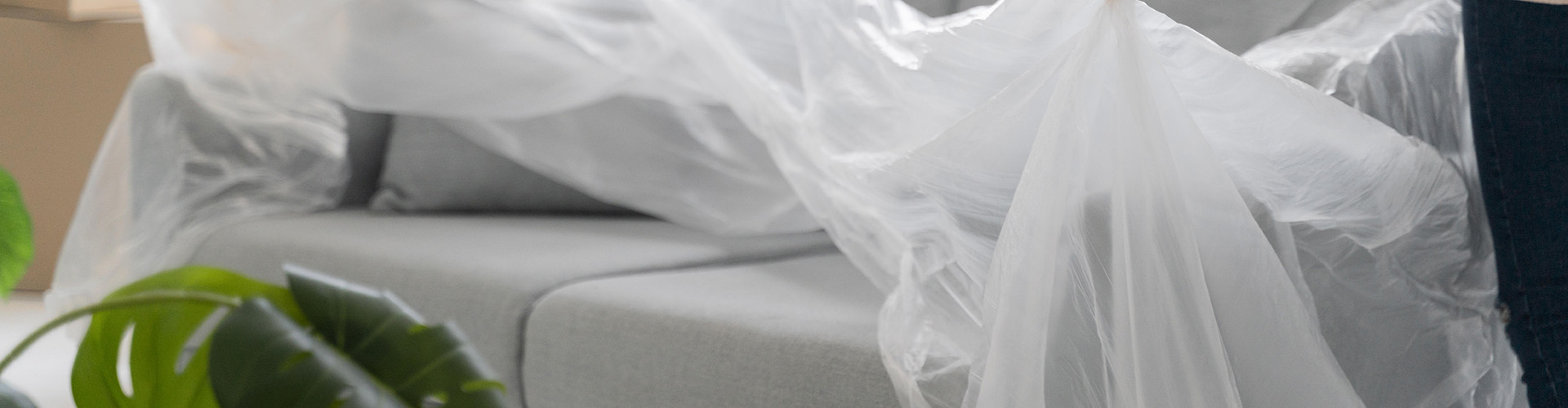
· Home decoration construction: When painting the wall, cover the floor and furniture, and protect the area outside the gaps when tiling.
· Car maintenance: Cover non construction parts of the car body during painting to avoid paint contamination.
· Cleaning and protection: Cover electrical appliances and soft furnishings during a thorough cleaning to prevent water stains or dust from adhering.
· Industrial production: Protect screens and metal components during electronic product assembly to avoid scratches or fingerprints.
Precautions for using plastic masking film
Preparation before use
· Clean the surface: Ensure that the surface to be protected is clean, dry, and dust-free. You can use a cleaning agent or alcohol to wipe it dry and avoid dust affecting the bonding effect.
· Select appropriate materials: Choose according to the scene - use masking paper for fine areas, reinforce complex corners with tape, use masking film for large flat surfaces, and fill curved surfaces with masking sponge.
Operating Specifications
· Avoid wrinkles: When covering, flatten the film to prevent the accumulation of paint mist at the wrinkles and the formation of "shadow areas", leaving marks after tearing off.
· Sequence and fixation: Operate from top to bottom, with gaps blocked with masking paper; Secure the edges with tape or use magnetic strips to fix non self-adhesive films to avoid displacement.
· Edge transition: During painting, use masking paper to transition the edges to prevent the coating from peeling off and affecting the quality of the film.
Usage taboos
High temperature and ventilation: Avoid using on high temperature surfaces (such as freshly cooked food) or wrapping running electrical appliances to prevent the release of harmful substances or poor heat dissipation; When covering furniture for a long time, ventilation is necessary to avoid mold growth.
Post-processing
· Gentle removal: After construction, gently peel off to avoid pulling and causing paint cracking or adhesive residue.
· Timely cleaning: Clean the film after use to avoid stains affecting the next use; Regularly replace aging and damaged membranes.


